Eyelash Extension Training Course Basics: What to Expect


Lash extensions have become increasingly popular over the years, and it is a good time to start a career in this industry. If you are considering becoming a lash technician, this is what a training course actually involves. I run these courses, so I am describing what happens in the room rather than what a brochure says.
What to Expect During the Eyelash Extension Training Course?
A proper course covers the whole process, from consultation through to application. You will learn the different lash types, the techniques for applying them and how to care for them afterwards. You will also learn where the risks are and how to avoid them, which matters more than most beginners expect. And you will spend real time with the tools in your hands, not just watching.
The Theory
Theory comes first in my training, and I do not rush it. It covers the anatomy and physiology of the eye, safety and sanitation, and the principles behind application. You learn how to choose extensions based on the client’s natural lashes, their lifestyle and the look they want, which are three different things that do not always agree.
I teach it this way round on purpose. Theory first, hands second. It is what protects your clients’ eyes and their lash health once you are working alone.
Hands-on Practice
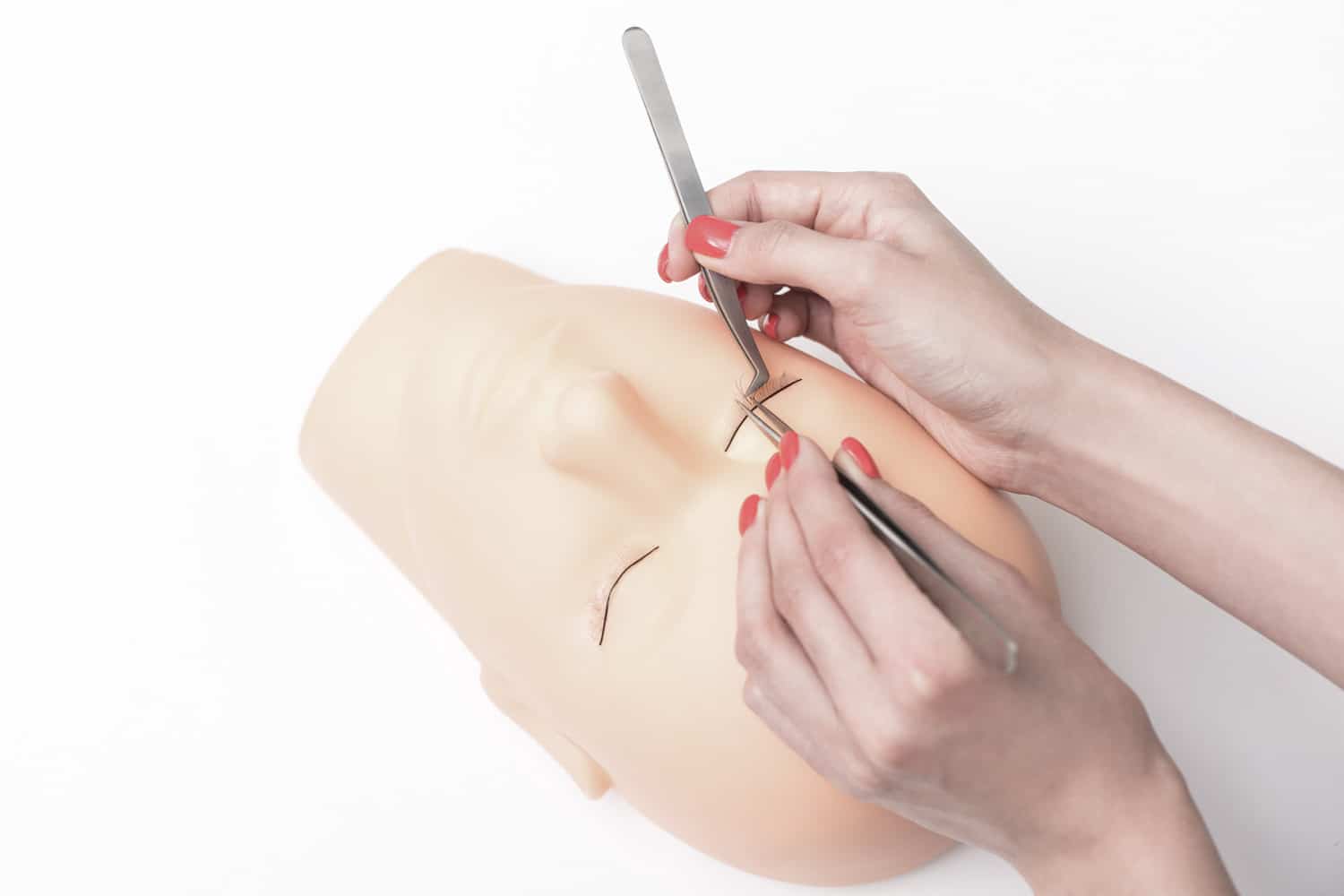
Once the theory is in place, you practise. This is where you learn to isolate properly, place an extension without damaging the natural lash, and build different looks from natural through to dramatic.
You start on a training doll and move to a live model. In our two-day course, students who arrived with no experience at all leave having completed a full set on a real person. That progression is the point of the two days.
Aftercare
Training also covers aftercare, because a beautiful set that falls out in ten days is not a good set. You learn how to explain aftercare to clients so they actually follow it, and how to remove extensions safely without damaging the natural lash. Getting this right is what turns a first-time client into a regular one.
Certification
At the end you receive a certificate confirming you completed the required training and practice. It tells clients you are qualified and it helps you stand out.
One thing I want to be clear about, because it is not how everyone works. We do not hand out certificates simply because someone paid for the course. If a student is not ready on the day, we say so, and we invite them back for an extra day at no cost. A certificate should mean something, and giving one to someone who is not ready is not kindness. It is carelessness.
Building Your Clientele
After training you start building your client base. Friends and family are the usual beginning, and a first-client discount helps fill your early weeks. From there it is word of mouth, reviews and social media.
Support does not stop when the course ends, either. Within two months of finishing, our students can book a free half-day session with a trainer, because the questions that matter usually arrive after you have worked on a few real clients.
Continuous Education
Training is not a one-off. I have taken more than ten trainings myself over the years, and I still learn things. Advanced courses, workshops and conferences are how you refine what you have and add to it.
Who Can Attend Lash Extension Training?
Anyone. Whether you are a complete beginner or an experienced technician adding a technique, there is a course for you. Some courses require a beauty or cosmetology licence, others require nothing at all. Ask the trainer directly what their prerequisites are.
How Do You Choose the Right Lash Extension Training Course?
Do your research, and do not be shy about it. Look for accreditation from a recognised body. Read reviews from students who have been through it. Check that the trainer has the experience and qualifications to teach, and ask to see their certificate if you want to. A good trainer will be glad you asked.
Then choose the one that fits your budget and schedule, in that order.
Training is a genuine investment in your career. Find a reputable program, learn the fundamentals properly, and the rest follows. The technique is only half of it; the other half is how you treat the person in the chair.
If you are comparing courses right now, ours run in Sydney and Melbourne, and the lash educator course is the step after that, once you are ready to teach.
You may also want to check out these related articles:
7 things you need to do before starting your own eyelash extension business >>
Sign up for our newsletter
Subscribe for the latest updates, exclusive offers, and insider tips on mastering lash techniques.