A Guide to Clear and Black Eyelash Extension Glue

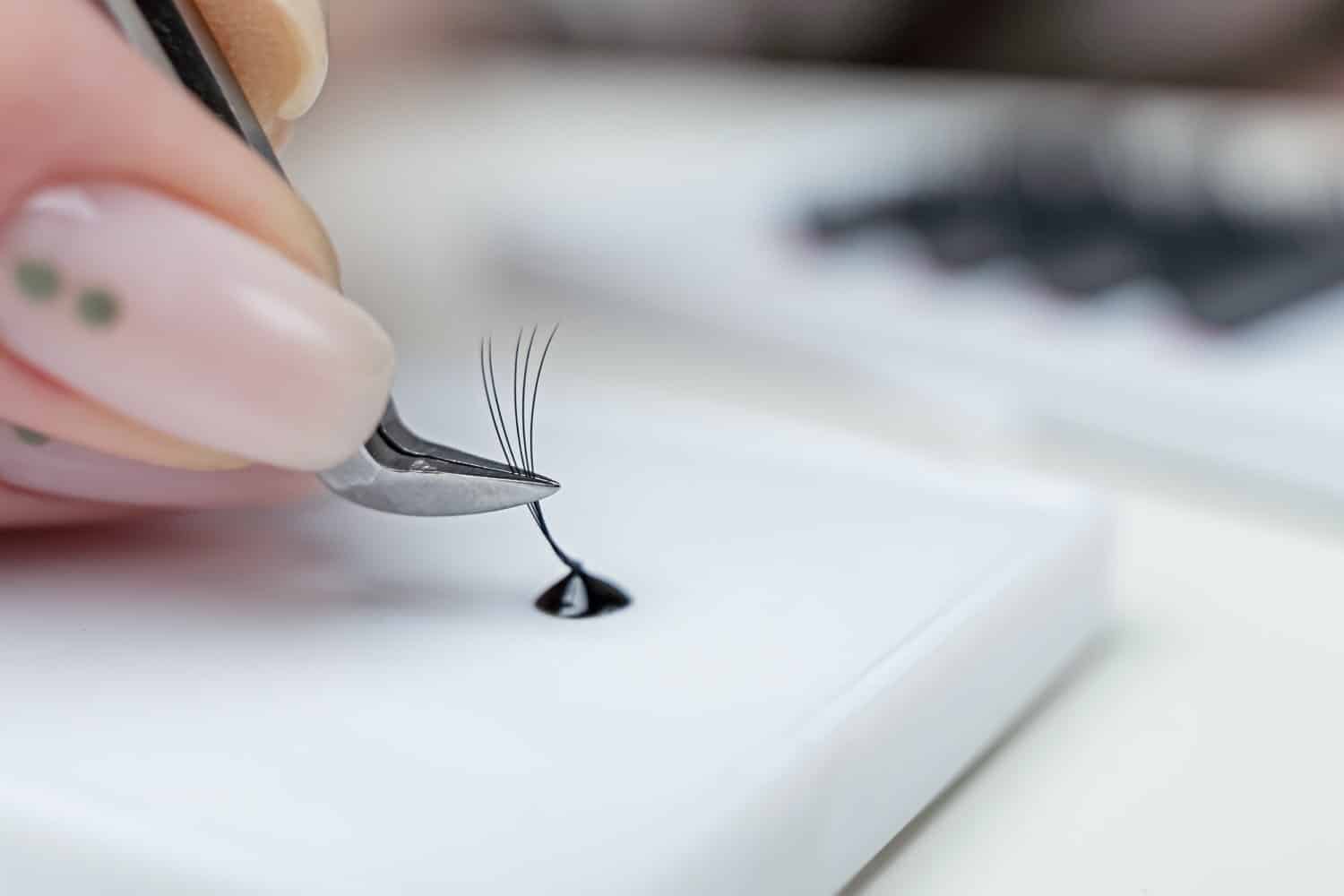
Your adhesive does more work than almost anything else on your trolley, so I want you to understand what you are actually choosing between. Black and clear glue each have their place, and knowing which suits the client in front of you changes the result more than most artists expect. Let me take you through both.
Main Lash Extension Glue Ingredients:
Cyanoacrylates
Cyanoacrylates are the main active ingredient in almost every lash adhesive. These molecules form strong bonds and are what keep extensions attached to the natural lash. There are two you will see: ethyl cyanoacrylate and methyl cyanoacrylate. Ethyl is the more common of the two because it has a longer bonding time, though it can irritate if it touches skin or eyes. Methyl bonds faster but is less likely to irritate on contact.
Methanol
Methanol is an alcohol used as a solvent for the cyanoacrylate molecules. It breaks the particles down so they bond more easily and hold for longer. It also acts as an activator: once it meets the moisture on the natural lash, it triggers the adhesive properties and the bond forms.
Polymers
Polymers thicken the solution and give it a smoother consistency, which makes it easier to work with and gentler on the natural lash. Polymer-based glues cost more, but they tend to bond for longer, and in my experience that is worth paying for if you want your sets to hold. They also reduce clumping and flaking during application, which is where premature shedding usually starts.
All About Black and Clear Glue:
Black Glue
I reach for black glue on clients with naturally darker or thicker lashes. It gives more definition and opacity than clear, which suits a bolder lash line, and it sets faster, so you can work at pace. I would not use it on light lashes, though. The colour shows through on fine, pale hairs and the result stops looking natural.
What is Carbon-Black Eyelash Extension Glue?
Carbon-black adhesives are made with carbon and black pigments, which is what makes them suit darker lashes. They are thicker than standard clear glues, hold well, and dry quickly, so they are efficient to work with when your day is fully booked.
Clear Glue
Clear glue is what I use on lighter or finer lashes, because the colour never interferes with the natural look. Plenty of clients prefer it for exactly that reason: the effect stays soft rather than graphic. Clear sets more slowly than black, but the bond lasts, up to eight weeks when the application is right.
How Long to Hold
Whichever adhesive you use, the hold time matters as much as the product. I teach 2 to 3 seconds for beginners and 1 to 2 once you are working confidently. Most of the retention problems I see in students’ work come from letting go too early, long before the glue itself is the issue.
Keep an eye on your room, too. Temperature and humidity change how your adhesive behaves, and a glue that worked perfectly last week can misbehave on a humid day without anything else changing.
Understanding what is in your adhesive is part of working safely. Most lash glues combine cyanoacrylates, methanol and polymers in some form, and each behaves differently depending on the look you are building. Choose deliberately rather than by habit, and your retention will tell you that you got it right.
Adhesive is one of those things that makes sense far faster with someone beside you, watching your timing. We work through it on real clients in our course in Sydney and Melbourne.
You may also want to check out these related articles:
How to choose the right eyelash style for your client’s eye shape >>
Sign up for our newsletter
Subscribe for the latest updates, exclusive offers, and insider tips on mastering lash techniques.